
Glass
What happens in a storefront emergency board-up
Broken storefront glass is two jobs on two different clocks. One of them has to happen today and the other should not be rushed.
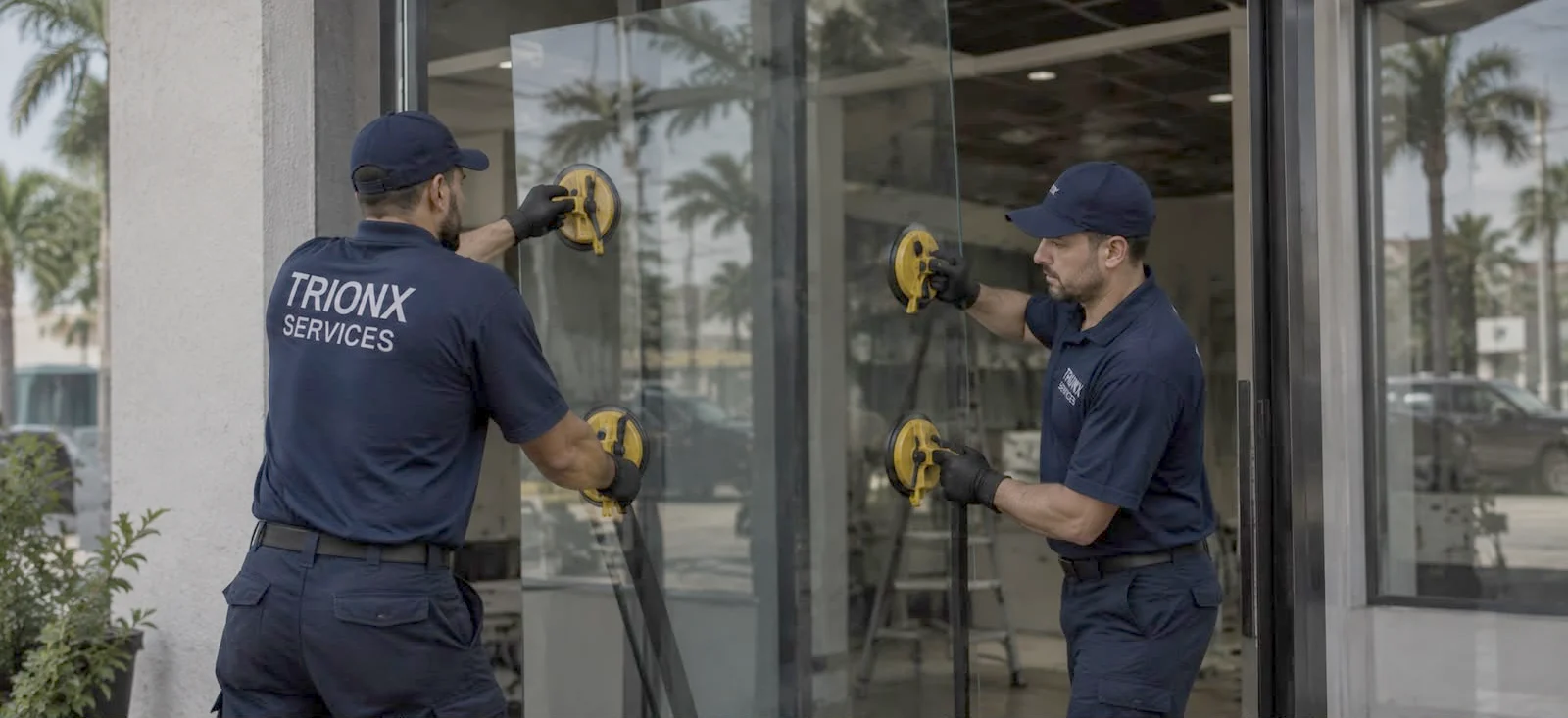
Storefront glass breaks for ordinary reasons. Impact from a vehicle or a passing accident, a break-in, storm debris, or thermal stress on a pane that has been quietly cracked for months. Whatever caused it, the sequence that follows is the same, and the first hour matters more than most people expect.
The first hour
Make the area safe. Broken glass on a pedestrian frontage is a hazard to the public before it is a problem for you. Cordon the area, keep people back, and do not start sweeping until anyone in the vicinity is clear.
Photograph everything before you touch it. Wide shots of the whole frontage, closer shots of the break, the frame, anything that caused it and anything visibly disturbed inside. This takes three minutes and it is the evidence your insurer will want. Once the glass has been swept and boarded, that record cannot be recreated.
Note the time. The time the damage was found, and the time it was reported, both matter on a claim and both are easy to lose track of by the following morning.
If it was a break-in, call the police first. Most commercial policies require a report number, and the scene should not be disturbed before it is taken.
Then call for a board-up. The property should be secured the same day. Dispatch runs around the clock, and Downtown Miami in particular we can reach quickly because our office is on West Flagler Street.
What a proper board-up involves
Board-up is a trade job rather than a sheet of ply and a nail gun, and the difference shows up in whether the frame survives.
Remaining glass is removed from the frame first. Fragments left in the glazing channel are dangerous to the next person working on the opening and prevent the replacement being fitted cleanly. The opening is measured, and the board is cut to it and fixed into the frame or the surrounding structure in a way that will not damage either. On an aluminium shopfront that usually means fixing to the frame rather than through the finish.
The result should be genuinely secure. A board that can be levered off in thirty seconds satisfies nobody, least of all an insurer taking a view on whether the premises were left secure overnight.
Where a shopfront is customer-facing and the wait for glass will be weeks, the board can be finished and painted rather than left as raw ply. It is a small cost and it is the difference between a business that looks closed and one that looks like it is being looked after.
Why the glass is a separate job
Replacement glass is made to the opening. Once the board is up, the frame is measured properly, the specification is confirmed and the unit is ordered.
Lead time varies by a factor of ten and it is worth knowing which end you are at. A standard tempered pane in a common size can often be in within a couple of days. A laminated or impact-rated unit made to a non-standard opening runs to two or three weeks, because it is fabricated to order.
Rushing this is how a shopfront ends up with a pane that is nearly the right size, packed out at the edges, in the wrong specification for the opening. The board is what buys the time to do it once.
Getting the specification right
Whatever was in the opening before is not automatically what should go back. Three questions decide it.
What does the code require here? Glazing in doors, sidelights and other locations subject to human impact has to be safety glazing. If what broke was not, the replacement still has to be.
Is the opening in a windborne debris region? Much of Miami-Dade is, and openings in those areas have impact protection requirements. An impact-rated unit costs more and takes longer, and fitting a plain pane in an opening that requires one is a problem waiting for the next storm or the next inspection.
What is the door hardware doing? While the opening is apart, it is the cheapest moment there will ever be to deal with a closer that has been slamming, a pivot that has dropped or a lock that has needed a shoulder for a year. Hardware generates more glass and door calls in Downtown than breakage does.
The claim
Keep the board-up and the replacement as separate invoices. They are separate events with separate dates, and insurers handle them more smoothly when they arrive that way. Together with the photographs, the time the damage was found and the police report number where there is one, that is usually everything an adjuster needs.
Where a claim gets difficult, it is almost always because the evidence was assembled after the fact rather than in the first hour. Three minutes with a phone camera is the cheapest insurance in this entire process.
Keep reading
Related field notes

Need something looked at?
Tell us the property and the problem, and we will come back with a window.